Milmyeon exists because of a shortage.
Refugees who came south to Busan during the Korean War wanted naengmyeon, the cold buckwheat noodles they’d eaten in the north. Buckwheat wasn’t available. American army flour was, in quantity. So they made the noodles out of wheat instead and served them the same way.
Seventy-odd years later it’s the dish Busan makes that nowhere else does properly, and on a hot afternoon there’ll be a queue out the door. 🍜
🍜 What you’re actually getting
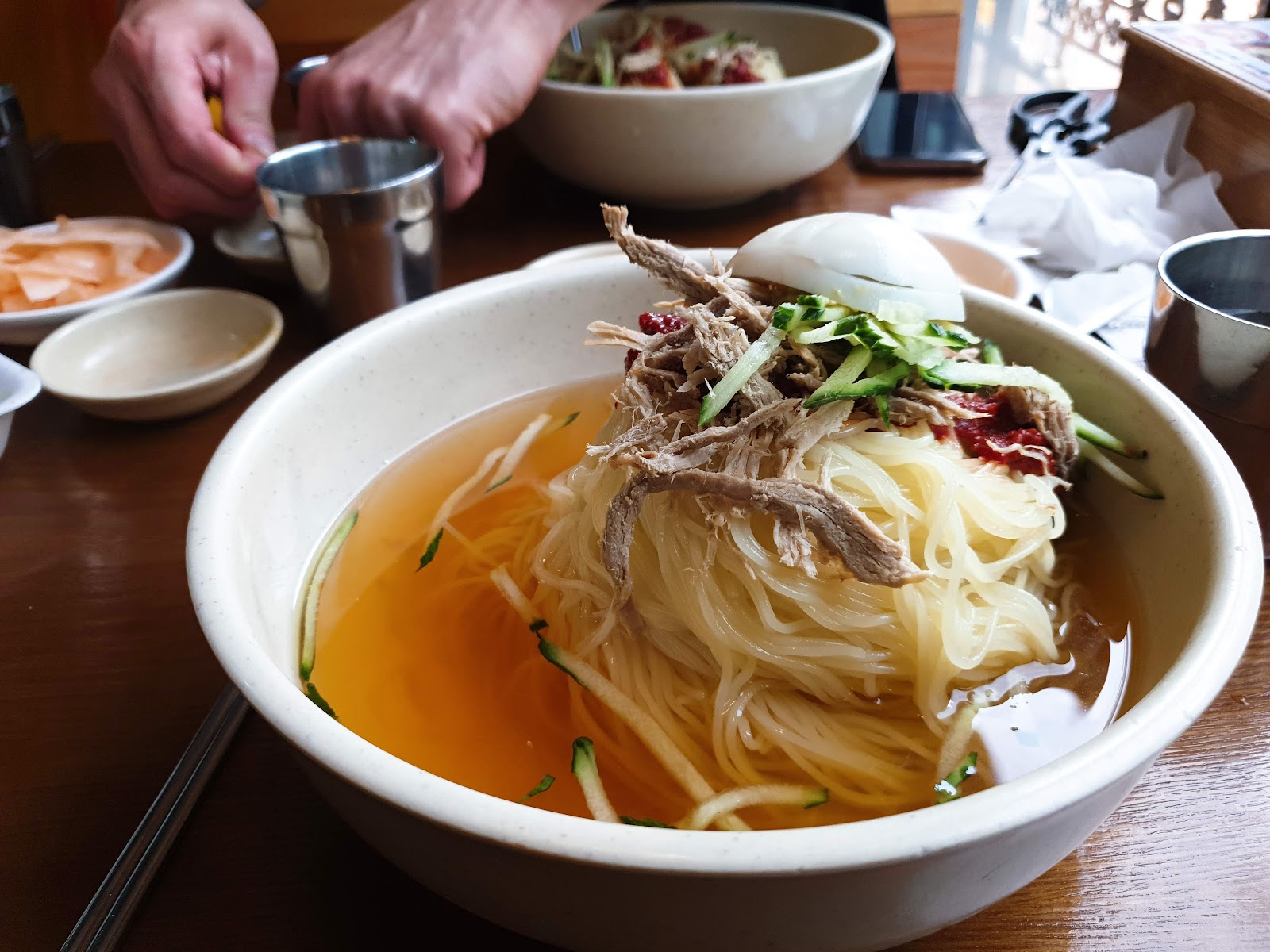
Chewy wheat noodles in a cold broth, with slices of beef, half a boiled egg, cucumber, pickled radish, and a spoonful of red seasoning paste on top. Ice in the bowl, sometimes slushy.
The broth varies by shop and this is where places differentiate themselves. Some build it on beef bone, which gives a rounder, heavier result. Others use anchovy, which comes out sharper and cleaner. Both are correct. Regulars have strong opinions.
The noodles are the constant. Wheat makes them springier and chewier than buckwheat, and they hold up in cold broth without going soft. You’re meant to have to work at them a little.
🕰️ Where it came from
In 1950 and 1951 Busan was the last city standing. The government had moved here, and so had close to a million people who had nowhere else to go. The population roughly doubled.
Among them were families from the north who had grown up eating naengmyeon, and some of them opened restaurants to make a living the only way they knew. The problem was the noodles. Naengmyeon is buckwheat, and buckwheat wasn’t coming into a port city under wartime rationing.
What was coming in was American wheat flour, in aid shipments, in volume, and cheap. So they used it.
Naeho Naengmyeon
The shop generally credited with doing it first is Naeho Naengmyeon, still operating in Nam-gu, run by descendants of the family that started it. They were making northern-style cold noodles and swapped the flour because they had to.
It was a compromise. It wasn’t supposed to become a category. But wheat noodles turned out to be chewier and more satisfying in cold broth than the thing they were replacing, they were cheaper to make, and a hungry city took to them.
By the 1960s enough shops were doing it that the dish needed a name of its own. 밀 (mil) means wheat. 면 (myeon) means noodle. That’s all milmyeon is: the wheat version.
Why it stayed in Busan
Naengmyeon travelled the whole country and became a national dish. Milmyeon mostly didn’t.
Part of that is simply where the refugees settled. Part of it is that Busan kept eating it after the shortage ended, when it would have been easy to go back to buckwheat. The city decided it preferred the substitute.
You can buy milmyeon in Seoul now. People from Busan will tell you not to bother.
❄️ Milmyeon or naengmyeon? (they are not the same)
If you’ve eaten in Korea before, you’ve probably had naengmyeon and may assume this is a regional spelling of it. It isn’t.
| 밀면 Milmyeon | 냉면 Naengmyeon | |
|---|---|---|
| Noodles made from | Wheat flour | Buckwheat (with starch) |
| Texture | Springy, chewy, elastic | Softer, more brittle, snaps |
| Broth | Often sweeter, sometimes anchovy-based | Cleaner, cooler, beef or dongchimi |
| Seasoning | Usually served with red paste on top | Usually plainer, you add mustard and vinegar |
| Comes from | Busan, 1950s | North Korea, much older |
| Price | ₩7,000 to ₩9,000 | Often ₩12,000 and up |
The practical difference at the table is texture and price. Milmyeon is chewier and noticeably cheaper. Naengmyeon is the more refined dish and charges for it.
If you only try one cold noodle dish in Busan, try this one. Naengmyeon you can get anywhere in the country. 🇰🇷
🥣 The two broth styles
Shops fall into roughly two camps and it changes the bowl more than anything else on the menu.
| Beef bone broth | Anchovy broth | |
|---|---|---|
| Tastes | Rounder, richer, slightly sweet | Cleaner, sharper, more savoury |
| Body | Heavier on the palate | Lighter, easier in heat |
| Common at | The older landmark shops | Neighbourhood restaurants |
| Suits | A proper sit-down meal | A hot afternoon |
Most places also add fruit to the broth, usually pear or apple, which is where the faint sweetness comes from. A few use radish water. Recipes are guarded and shops will not tell you.
If you have two meals to spend on this, have one of each. The difference is obvious side by side and not at all obvious from a menu.
🥢 Water or mixed: the only ordering decision
Every shop sells the same two things and you need to pick one.
| Korean | Read as | What it is | Who it suits |
|---|---|---|---|
| 물밀면 | mul milmyeon | In cold broth. Soup you can drink. | First-timers. Hot days. Start here. |
| 비빔밀면 | bibim milmyeon | No broth. Noodles mixed with spicy sauce. | If you want heat over refreshment. |
물 means water and 비빔 means mixed. That’s the whole vocabulary.
A few places also do a hot version in winter. It’s less common and not what the shop is famous for.
The red paste on top
Your mul milmyeon arrives with a scoop of red seasoning sitting on the noodles. Don’t stir it in immediately.
Taste the broth first, plain. Then stir the paste through a bit at a time. Mixed in all at once, it turns the whole bowl spicy and you lose the broth, which is the part the shop worked on.
Scissors usually come with the bowl. The noodles are long on purpose and cutting them is normal, not a failure. ✂️
🥟 Order the dumplings
Almost every milmyeon shop sells mandu alongside, steamed or fried, and it’s the standard pairing. A bowl of noodles alone is a light meal. With half a plate of dumplings it becomes lunch.
Some places sell half portions, which is the right call if you’re eating alone. One reviewer at a famous shop noted that hardly anyone was ordering the dumplings and seemed puzzled by it. They were right to be. Get the dumplings.
🕐 The queue is real
This is the part visitors underestimate. The well-known shops fill up within minutes of opening and stay full.
- Summer weekends are the worst. One reviewer waited over an hour with their family in August and nearly gave up. The noodles were good. The wait was not.
- Sunday mornings fill immediately. A shop can be at capacity minutes after it opens.
- Weekday mid-afternoon is the gap. Between about 2pm and 4pm you’ll usually walk straight in.
Most of these places also have no parking, which matters if you were planning to drive. Take the subway or a taxi.
If you’re in Busan in July or August, milmyeon is what everyone else is also eating. That’s the season it was made for, and the queues reflect it.
📍 Where to eat it
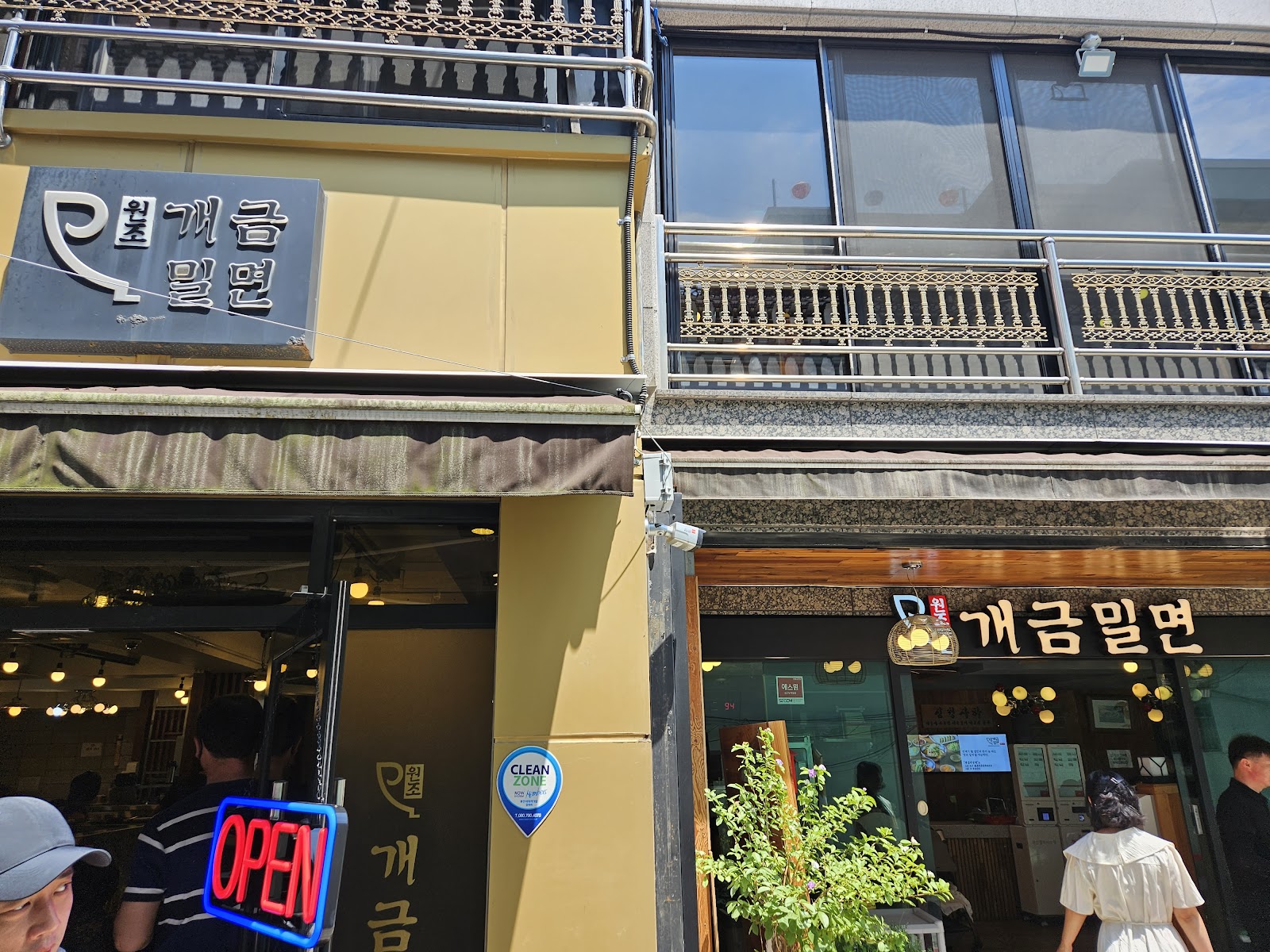
Wonjo Gaegeum Milmyeon — Busanjin-gu
- Where: 88-8 Gayagongwon-ro 14beon-gil, Busanjin-gu.
- Hours: 11am to 8pm, every day.
- Rating: 3.8 from around 1,900 Google reviews.
- Phone: 051-892-3466. No parking.
The famous one, and the reviews reflect what happens to famous restaurants: consistently good food, occasionally long waits, and some visitors who expected to be astonished and merely enjoyed it. A 3.8 average for a shop this well known is honest rather than damning.
Broth here leans to the traditional heavier style. Go on a weekday if you can.
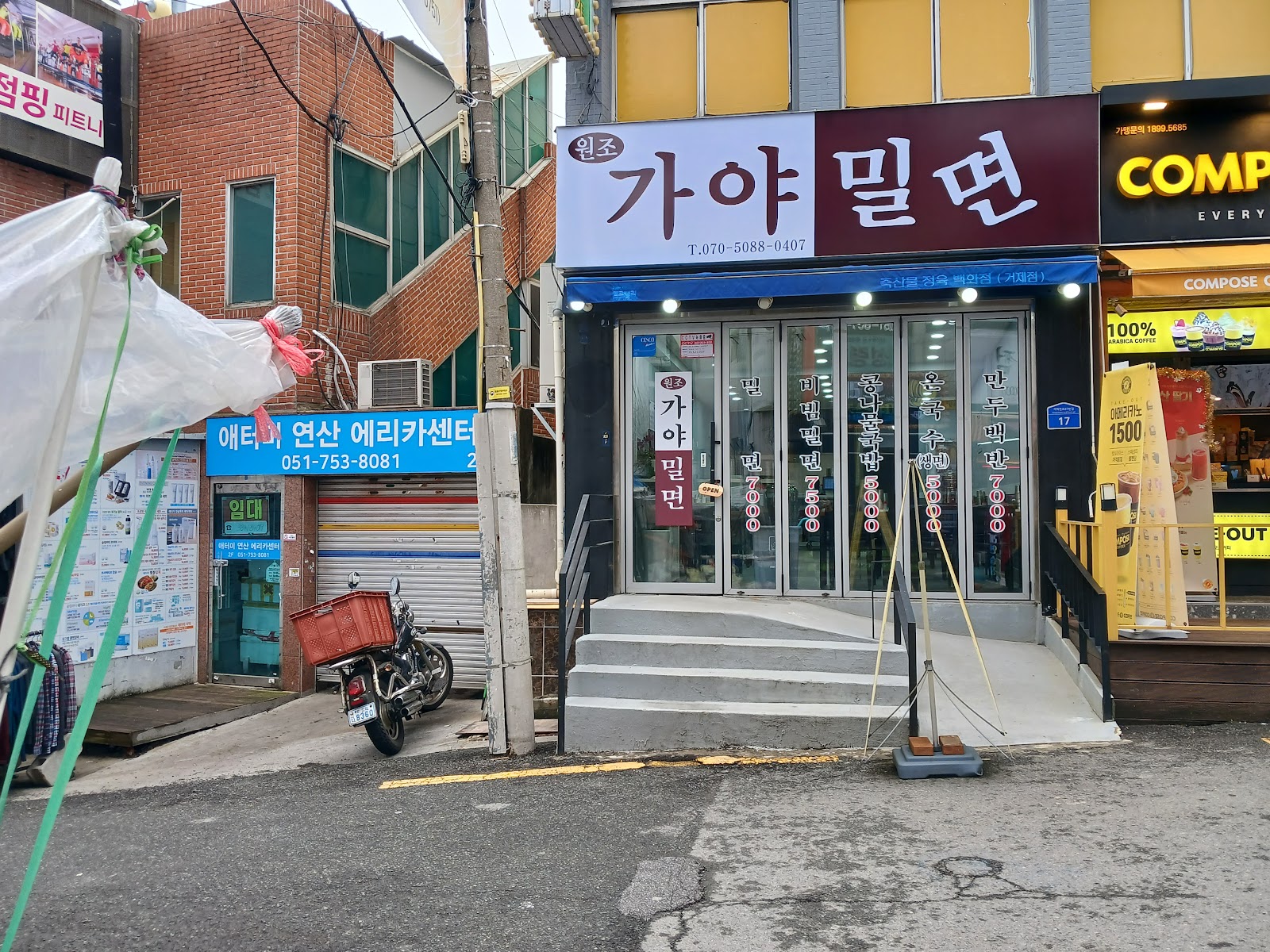
Wonjo Gaya Milmyeon — Yeonje-gu
- Where: 576-7 Geoje-dong, Yeonje-gu.
- Phone: 051-853-3318.
- Prices: ₩7,000 standard, ₩8,000 large.
Anchovy-based broth rather than beef bone, which makes it a genuinely different bowl to the one above. Cleaner, a little sharper. The beef comes shredded rather than sliced.
It’s a neighbourhood restaurant rather than a landmark, so it’s cheaper and you can usually sit down. If you want to taste the difference between the two broth styles, eat here and at Gaegeum on separate days.
Or the one nearest you
Milmyeon is everywhere in Busan and the standard is high. A shop full of locals at 1pm is a safe bet without any research at all.
🗺️ Fitting it into a Busan trip
Milmyeon is a lunch, and it’s fast once you’re seated. Fifteen minutes, not an event.
- Pair it with Gamcheon. The culture village is a morning, and Gaegeum Milmyeon is a short taxi ride from that side of the city.
- Or with a market. Gukje and Jagalchi are both walkable from the Nampo area, and there are milmyeon shops nearby without the queues of the famous ones.
- Not with dinner. Cold noodles at 8pm is possible but nobody here does it. This is a daytime dish.
The obvious counterpart is dwaeji gukbap, Busan’s hot pork soup. Between them they cover most of what the city is known for eating, and you can do one for lunch and the other the next morning.
What if it’s winter
Shops stay open and locals still eat it, though the volume drops. A few serve a warm version, which is a different dish and not what anyone means by milmyeon.
If you’re visiting in January, this is not the meal to build a trip around. Come back in July. ☀️
💰 What it costs
| Item | Typical price (2026) |
|---|---|
| 물밀면 / 비빔밀면 (standard) | ₩7,000 to ₩9,000 |
| Large portion (곱빼기) | About ₩1,000 more |
| 만두 dumplings, full plate | ₩5,000 to ₩7,000 |
| Half plate of dumplings | Around ₩3,500, where offered |
Prices crept up through 2025 and most shops now sit at ₩8,000 to ₩9,000. Anywhere still charging ₩7,000 is worth noting.
Noodles plus dumplings for two people comes to roughly ₩20,000 to ₩25,000, which is among the cheapest meals you’ll eat in Korea.
❓ Quick answers
What is milmyeon?
Cold wheat noodles in chilled broth, invented in Busan during the Korean War when buckwheat for naengmyeon wasn’t available. It’s the city’s signature noodle dish.
Is milmyeon spicy?
Mildly, and you control it. The red paste comes on top and you stir in as much as you want. Bibim milmyeon is spicier because the sauce is the dish.
What’s the difference between milmyeon and naengmyeon?
Milmyeon uses wheat noodles and is chewier, sweeter and cheaper. Naengmyeon uses buckwheat, is softer and cleaner-tasting, and usually costs more. Milmyeon is specific to Busan.
When should I eat it?
Summer is the point of it, though it’s served year-round. Lunch rather than dinner. Aim for weekday mid-afternoon to avoid queuing.
Should I get mul or bibim?
Mul (in broth) if it’s your first time. The broth is what the shop is judged on.
Is it vegetarian?
No. The broth is beef or anchovy based and there’s beef on top. There is no standard vegetarian version.
Where was milmyeon invented?
In Busan during the Korean War. Naeho Naengmyeon in Nam-gu is generally credited with making it first, substituting American aid flour for the buckwheat they couldn’t get.
Can I get milmyeon outside Busan?
Yes, increasingly, though it stayed a Busan dish in a way naengmyeon never did. Eating it here is the point.
Do I need to book?
Nobody takes bookings. It’s queue or come at a quiet hour.
📌 The short version
- What: cold wheat noodles in chilled broth. Busan’s own dish, born from wartime shortage.
- Order: 물밀면 (in broth) for your first bowl. 비빔밀면 is the spicy dry version.
- Cost: ₩7,000 to ₩9,000. Add dumplings.
- Taste the broth before stirring in the red paste.
- Use the scissors. Cutting the noodles is normal.
- Avoid: summer weekends and Sunday mornings. Go weekday afternoon.
- Where: Gaegeum Milmyeon (Busanjin-gu, the famous one) or Gaya Milmyeon (Yeonje-gu, anchovy broth, cheaper).
It came out of a shortage and turned into the thing Busan is best at. Eat it on the hottest day you get. 🌊